
Author Name – Karan Chavan
This is a commonly asked question during my interaction with the sustainability leaders of the companies. I would like to highlight this in the following blog article.
In the case of B2B supply chains brand owners can standardize and segregate the compostable plastics to give it further to the industrial composting facilities. (Availability and challenges in the Industrial composting facility will be addressed in the other blog post)
B2C cases may seem to be challenging for the Industrially compostable plastics. comparatively simple for the home compostable plastics.
The difference between non-compostable, industrial-compostable, and home-compostable plastics lies in polymer chemistry and the conditions required for complete biodegradation.
There is one more category which I felt not to even compare with the above three types due to its worst impacts.
That is oxo-degradable which is often marketed as Biodegradable Plastics. This is the exact same conventional plastic with 1-3% addition of some chemical additives to aid the disintegration process in the uv, heat and oxygen. However, such oxo-degradable plastics are proven to have a risk of partial degradation by leaving microplastics after disintegration. This could be even more dangerous as these microplastics can further easily penetrate into the soil, water bodies and air. Such contaminations can be disastrous from the human health point of view.
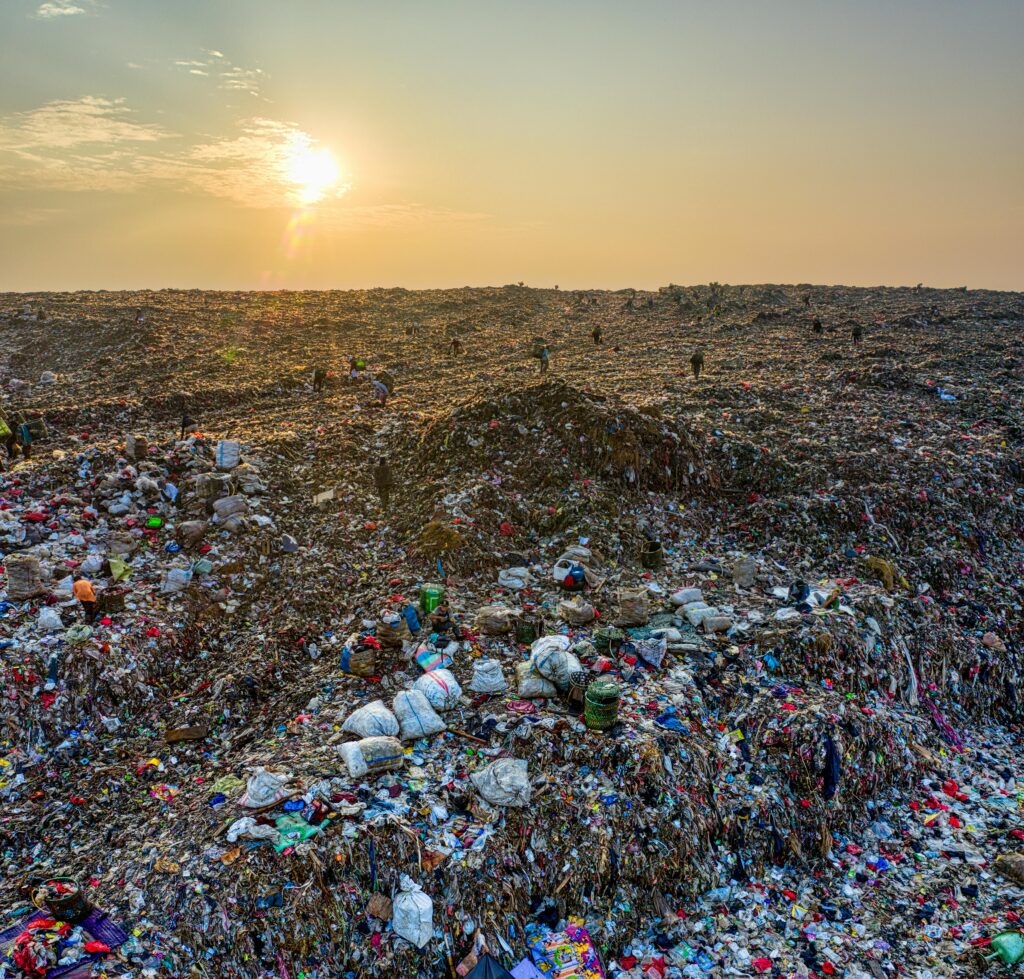
In a B2C scenario, compostable packaging or commodities are typically used by consumers and disposed of in dustbins. In most cases, this waste eventually reaches municipal corporation facilities or landfills.
So, what happens next?
A common concern is whether compostable plastics also break down into microplastics, similar to conventional plastics.
The answer is: Yes.
However, it is important to clearly understand that the nature and outcome of disintegration in compostable plastics is fundamentally different from that of non-compostable plastics.
The term microplastics is often used broadly, which can create unnecessary doubt and fear around compostable materials.
While conventional plastics break down into persistent, harmful microplastics that remain in the environment for decades, compostable plastics are designed to disintegrate into substances that can be further broken down by natural biological processes.
So, how exactly are they different?
LDPE → Oxidation → Chain scission → Shorter PE chains
→ Microplastics → Nanoplastics → Persistence
Microplastic accumulation occurs, which is dangerous when inhaled or swallowed. Due to their small size (less than 5 mm), these particles easily spread across air and water bodies, increasing environmental and health risks.
Compostable Polymers → Hydrolysis (water + heat) → Oligomers
→ Monomers → Microbial assimilation
Complete conversion into environmentally benign components:
CO2 + H2O + Biomass
While the pathway of degradation is clearly defined, the key variable that remains uncertain is the duration of this process, which depends on environmental conditions such as temperature, moisture, and microbial activity.
Industrially compostable plastics are designed to degrade under controlled composting conditions. More than 90% degradation occurs within 6 months in industrial composting facilities.
However, when these materials end up in landfills, the degradation process can extend over several years, which may be considered a limitation of this category.
Despite this, industrial compostable plastics play a critical role in applications requiring a longer and more predictable shelf life, which is not always feasible with home compostable alternatives.
Home compostable plastics are formulated to biodegrade under typical household composting conditions.
As per OK Compost Home (TÜV Austria), these materials must achieve at least 90% biodegradation within approximately 12 months.
Home compostable plastics are the most recommended option when the application permits their use.
For applications demanding a longer shelf life, industrial compostable plastics offer a more suitable alternative.
Importantly, both categories undergo complete aerobic degradation into CO2, water, and biomass, leaving behind no toxic residues.


